BLOGS
Explore our blog for insights on cutting-edge technology and discover how our agency delivers top-notch services tailored to meet your needs.
SEO in 2026: Why Keywords Alone Don’t Work Anymore
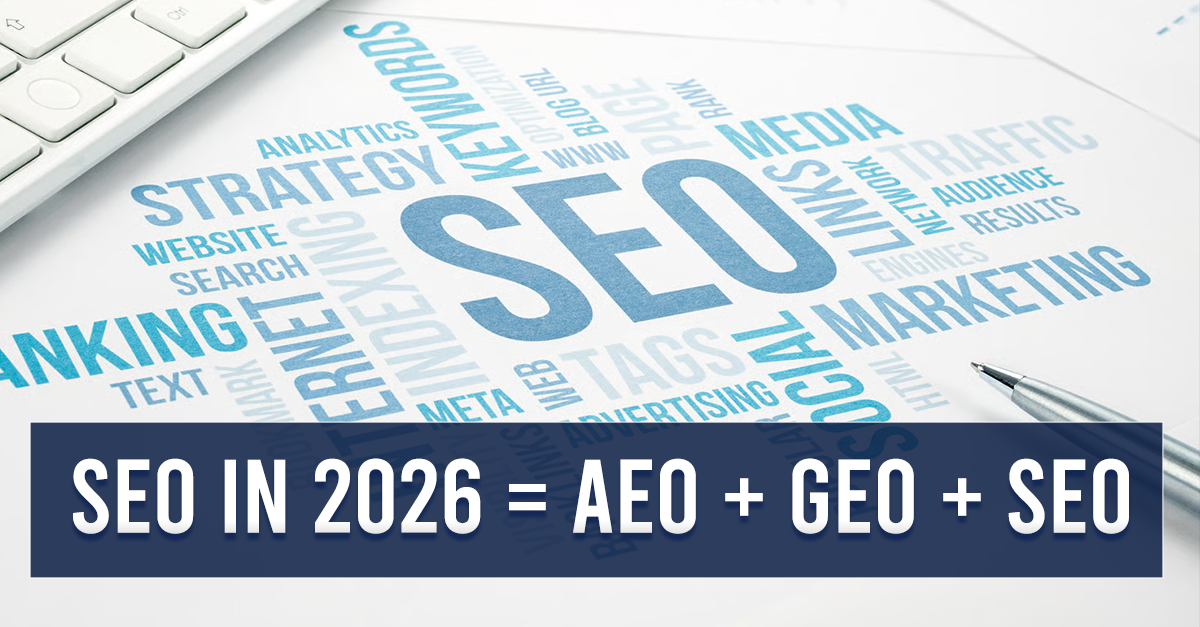
For years, SEO was simple: find keywords, add them to your content, build backlinks, and rank. That model is outdated. In 2026, search has changed not because keywords disappeared, but because search engines have become smarter, faster, and far more focused on user intent.
Google no longer ranks websites based on keywords alone. It now evaluates how well your website performs, how users interact with it, and whether your content is structured in a way both search engines and AI systems can understand.
Page speed is now a major factor. If your website loads slowly, users leave and Google notices. Mobile experience matters just as much. With most traffic now coming from mobile devices, poor responsiveness directly affects rankings. Security also plays a role. HTTPS is no longer optional. A site without proper encryption immediately loses trust signals. But the biggest shift is happening beyond traditional SEO.
We’re entering the era of AEO (Answer Engine Optimization) and GEO (Generative Engine Optimization).
AEO is about optimizing content so it can be pulled directly into answer engines like Google’s featured snippets, voice assistants, and zero-click searches. If your content doesn’t answer questions clearly and directly, it may never be seen.
GEO goes one step further. AI-powered search tools like ChatGPT, Gemini, and Perplexity are changing how users discover businesses. Instead of clicking through ten links, users now ask AI for recommendations, comparisons, and summaries.
That means your content must be AI-readable.
What does AI-readable mean?
It means:
• Clear structure
• Strong topical authority
• Well-organized headings
• Context-rich content
• Semantic relevance
• Real expertise
Keyword stuffing is dead. Thin content is dead. Writing for algorithms only is dead
Search engines now prioritize:
• User experience (UX)
• Content depth
• Technical SEO
• Structured data
• Intent matching
• Authority and trust
In simple terms:
A fast website with average content can beat a slow website with “perfect” keywords.
A well-structured article can outperform a keyword-heavy blog.
A trusted brand can rank higher even with fewer backlinks.